Ergo Focus - Switch Stitch
This project explores how ergonomic design and research-driven iteration can improve the comfort, control, and overall usability of precision hand tools. It aims to identify key variables that influence user experience and apply those insights to create a more intuitive and effective tool.
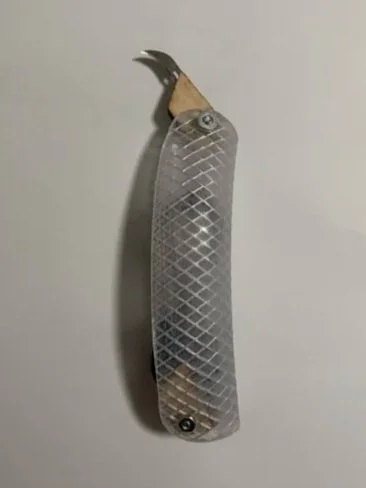
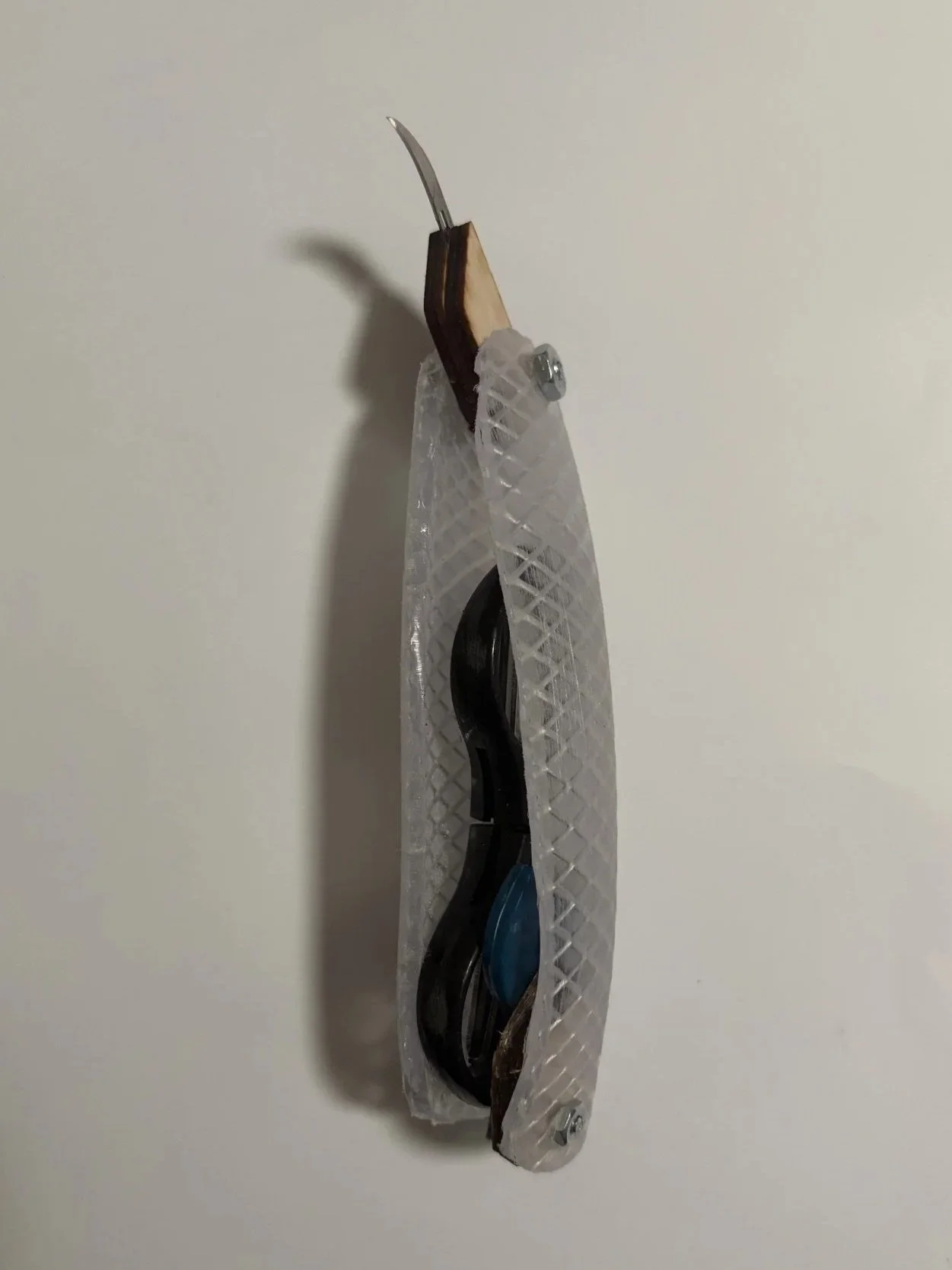
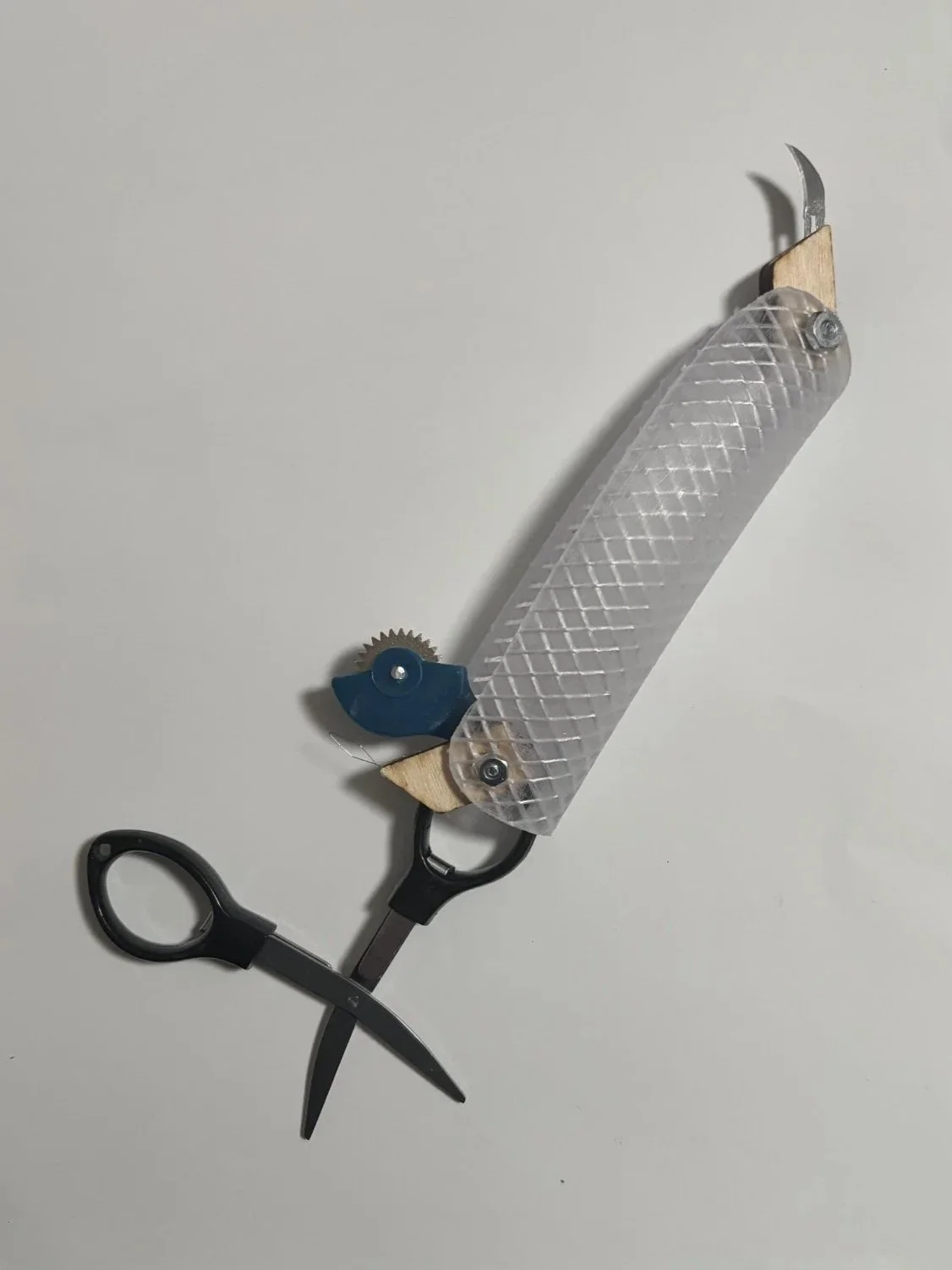
The final design is an ergonomic seam ripper multi-tool that enhances comfort and precision through a contoured handle, optimized blade geometry, and an intuitive thumb-actuated mechanism. The result is a more efficient and user-centered tool informed by testing and refinement.
Research
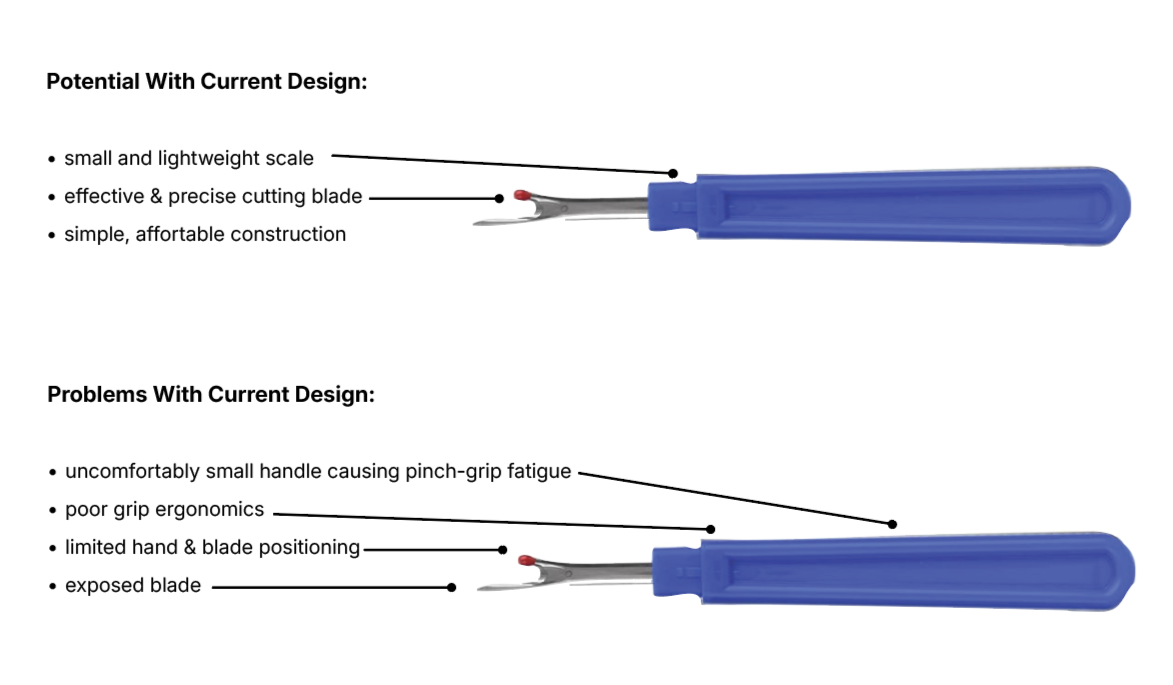
Testing
Test Plan:
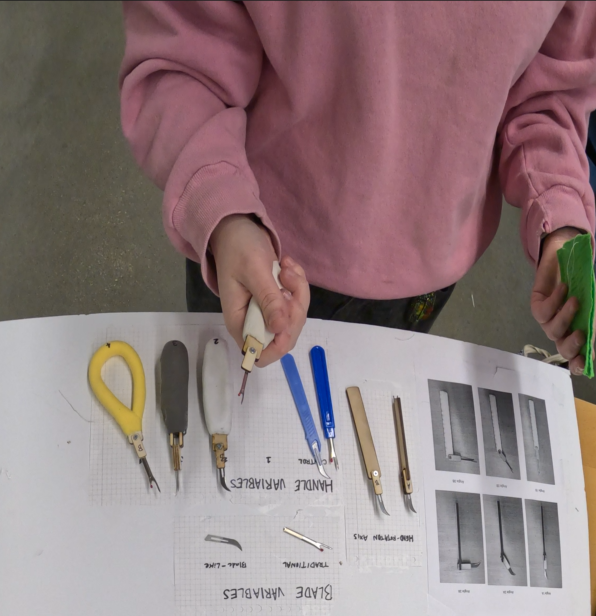
Goal – find information about handle form, blade type, and head orientation use this data to inform the ergonomic redesign of a seam ripper.
Who – I am interested in testing with users who sew at different experience levels. (Participants may range from beginner to experienced sewists)
How – by creating a set of modular testing tools that allow me to isolate ergonomic variables. Variables include handle design, blade type, head rotation angle, and rotation axis
Procedure:
1. Set up testing tools / variables before the user handles it
2. Provide background
3. Ask the user basic contextual questions; familiarity with seam rippers, experience with sewing / precision hand tools
4. Ask perceptual questions before use; initial impressions, perceived comfort, size, and usability
5. Ask the user to perform a seam-removal task with different configurations, observe grip, wrist motion, posture, and pauses. Follow each task with short comparative questions
6. After completing all tasks, ask the user to compare and rank configurations on comfort, control, and fatigue
7. Reset each testing tool after use
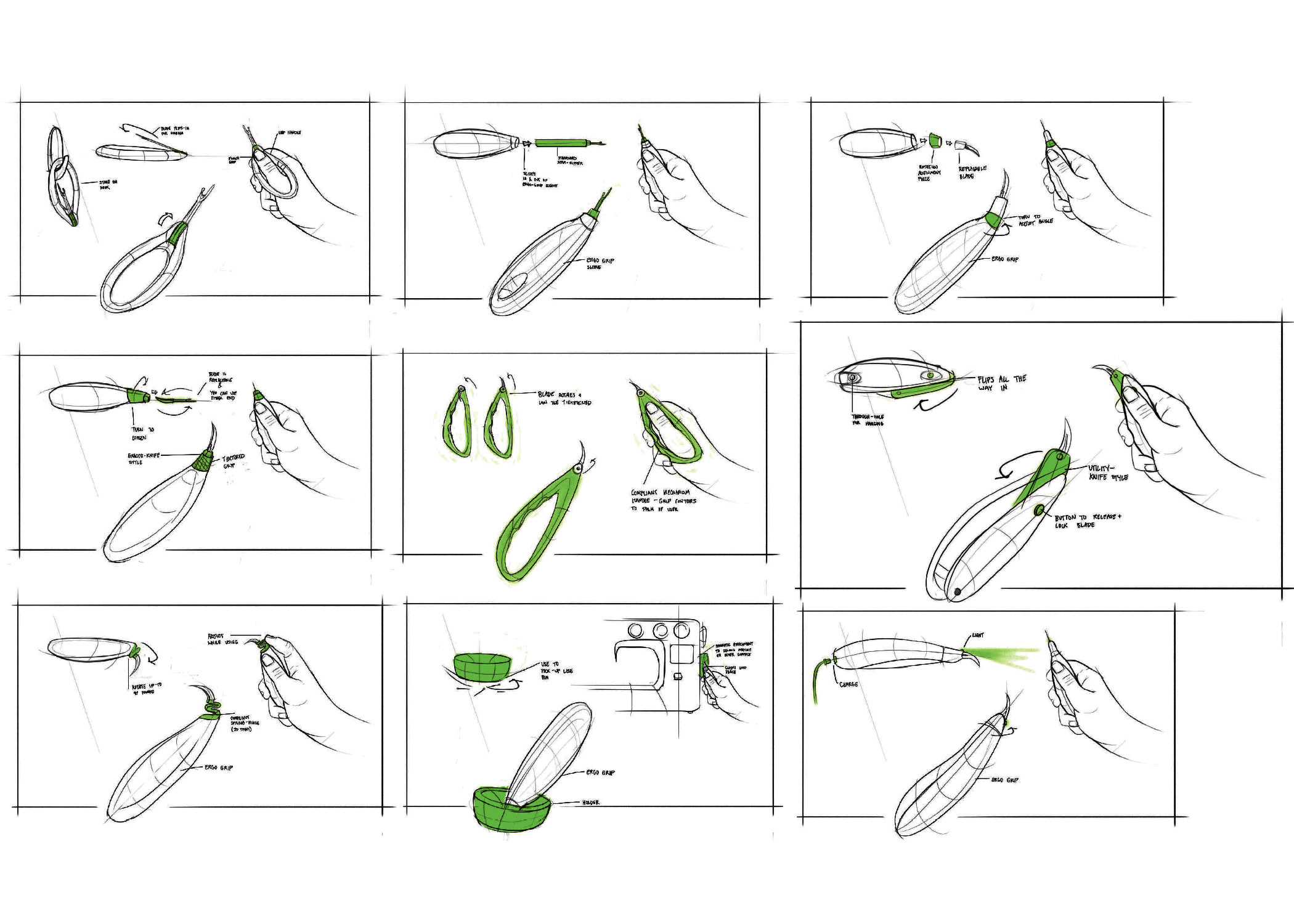
Concepting
Refinement
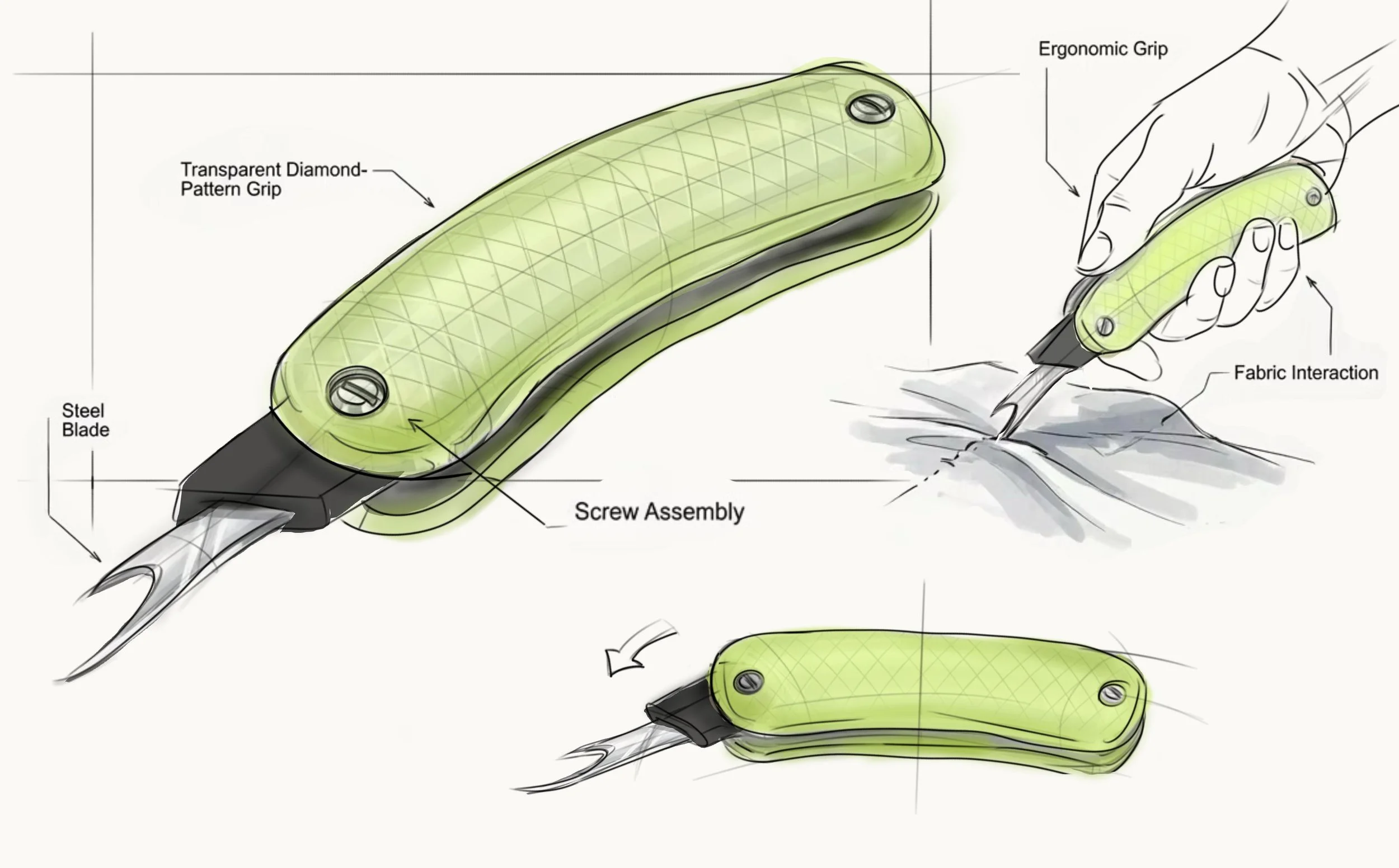
Proof of Concept Model